
FAQ topics
General company questions
How do I set up a service appointment or book a job?
Each project starts with a call. CHD's owner, Ron White, handles most calls directly.
We will then go over your goals and details about your property, plus any special concerns like HOA policies, insurance considerations, runoff planning, pets, etc.
An estimate can often be given over the phone, though for larger or more complex projects we will plan a visit to scope out the full project.
What information should I have ready before calling?
We don't need to know every detail up front, but it's helpful that we know enough to best serve you. Helpful details to have include: property location, which service(s) you're interested in and a "why" for the job. We also appreciate when you're able to provide information about the surface(s) being cleaned, if you have any photos, if there are access or scheduling concerns, and if there are any things we ought to know on parking, draining, landscaping concerns, etc.
What kinds of properties does CHD work on?
Custom Home Detailing works on a wide range of residential and commercial properties. We've worked on projects ranging from a movie star's mansion to academic institutions to large condominum complexes. If you call us, chances are we can help you.
What services can be discussed on a call?
Cleaning services include pressure washing, driveway and concrete cleaning, house washing, roof cleaning, gutter cleaning, window cleaning, solar panel cleaning, etc. If several services make sense together, the estimate conversation can cover bundling, sequencing and access considerations.
Is CHD insured? Are you reliable?
CHD is a licensed and insured, professional exterior cleaning company. We have had BBB accreditation, workers compensation coverage, liability insurance. We have decades of experience working with a wide range of customers and on many different types of projects and properties.
Concrete and pressure washing questions
How often should a concrete driveway be cleaned?
Most driveways do not need aggressive cleaning every year. The right interval depends on shade, irrigation overspray, tree debris, oil staining, tire marks, traffic, weather exposure, and HOA expectations. For many homes, cleaning every 1-3 years is enough; highly visible or heavily stained driveways may need service more often.
Is pressure washing safe for concrete?
When done properly, it is. We look at each surface and ensure the right choice on pressure, flow, nozzle option, and technique. Concrete is durable, but it can still be etched, striped, or scarred by poor technique. Our process helps ensure an even clean without damaging the top of the concrete.
Why use a surface cleaner instead of only a wand?
A surface cleaner helps produce a more even result and reduces the chance of wand marks or zebra striping. A wand is still useful for edges, corners, stains, and rinsing, but full-driveway cleaning usually benefits from controlled surface-cleaning equipment.
Can pressure washing remove oil stains or tire marks?
We've had a plenty of cases where our results exceeded customer expectations but realistic expectations still matter. Pressure washing can improve many stains, but conditions and cirumstances matter. Older oil may need pretreatment, dwell time, agitation, hot water where appropriate, and controlled rinsing. Tire marks and traffic lanes often improve, but sealed or decorative surfaces may require a more careful approach than simply increasing pressure.
Does driveway cleaning help with HOA concerns?
Often, yes. If the concern is visible staining, algae, dirt buildup, oil spots, or general curb appeal, professional cleaning can help address the appearance issue. We also offer before-and-after photos to help you with documentation.
What about runoff, plants, and nearby hardscape?
Runoff paths should be planned instead of accidental. Sediment, oil residue, detergent use, and nearby landscaping all go into how we plan water pathing. CHD factors in site conditions so the work can account for plants, drainage paths, storm drains, hardscape, and property rules where relevant.
Should a driveway be sealed after cleaning?
Not automatically. Sealing can be useful for some decorative concrete, pavers, or stain-prone surfaces, but standard concrete does not always need sealing after every cleaning. Over-sealing can lead to slipperiness, uneven appearance, trapped moisture, or future maintenance problems. It is a case-by-case decision.
Roof cleaning questions
Is roof cleaning necessary, or is it mostly cosmetic?
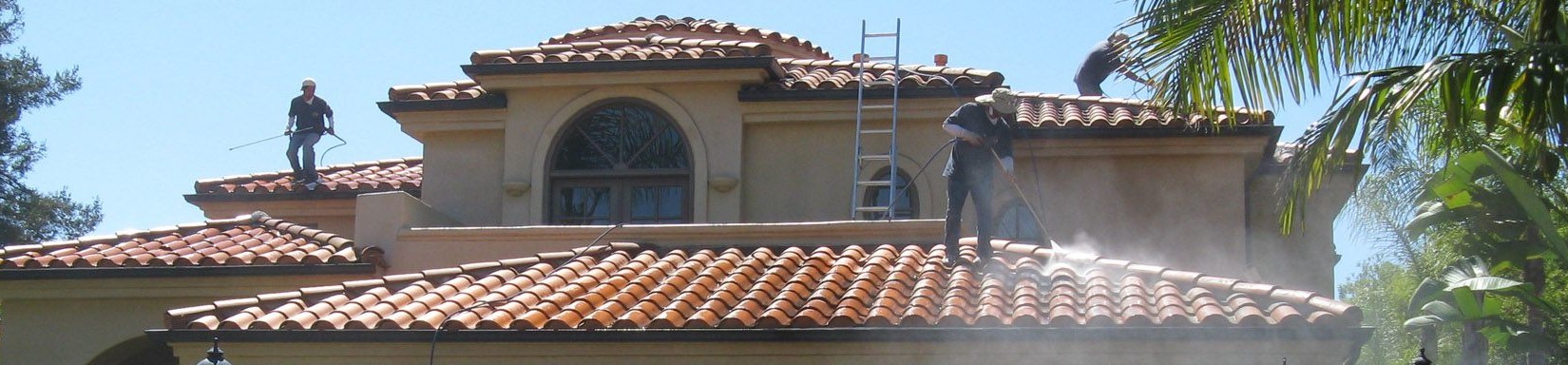
Roof cleaning is often done for appearance and pride of ownership, but it can be quite practical when organic growth, dark streaking, clogged valleys, HOA notices, insurance eligibility concerns, or resale presentation are factors.
Can roof cleaning damage tile, slate, or older roof materials?
Yes, if done incorrectly. Clay, concrete, slate, and older tile roofs can be damaged by careless foot traffic, aggressive pressure, or the wrong method. A quality roof-cleaning plan should consider material, layout, access, runoff, and existing roof condition.
Is pressure washing safe for roofs?
Roof pressure washing needs judgment. Excessive pressure can damage tiles, force water where it does not belong, loosen material, or create leaks. The safer approach is usually a controlled method matched to the roof material, debris level, growth, and surrounding property conditions.
Do HOAs or insurance companies ever ask for roof cleaning?
Some HOAs do when visible staining, moss, algae, or discoloration impacts appearance. Some homeowners also report insurer concerns about visible roof condition. Cleaning does not replace repair, but it can demonstrate an active maintenance pattern when the concern is surface growth or staining.
How do I know if I need cleaning, repair, or replacement?
Surface staining, algae, moss, dirt, and debris are usually cleaning issues. Broken tiles, leaks, sagging, exposed underlayment, widespread deterioration, or repeated water intrusion are repair or replacement issues. If there are known roof defects, discuss them before scheduling cleaning.
Do you protect landscaping and exterior surfaces during roof cleaning?
A responsible roof-cleaning plan should account for runoff, plant protection, rinsing, gutters, hardscape, and nearby walls. Prep matters because cleaning solution, dirty runoff, and dislodged debris can affect the property if the work is rushed.
Why hire a professional instead of doing roof cleaning myself?
Roof cleaning combines fall risk, fragile materials, runoff control, and property protection. DIY work can become expensive if tile breaks, water is forced under roofing, plants are damaged, or the wrong cleaner is used. For high-value or difficult-access homes, the risk profile usually favors an insured, experienced crew.
Gutter cleaning questions
How often should gutters be cleaned?
Most homes should have gutters checked once or twice per year. Homes with overhanging trees, pine needles, heavy leaf drop, roof debris, bird activity, or prior overflow problems may need more frequent attention. The real standard is whether water can move freely through the gutter system.
What happens if gutters are not cleaned?
Clogged gutters can overflow, stain fascia, rot wood, damage stucco, flood planter areas, undermine hardscape, and send water toward foundations or entries. The damage can be gradual: a small clog becomes repeated overflow, then repeated overflow becomes exterior damage.
How do I know my gutters need cleaning?
Common signs include water spilling over the edge, plants growing in the gutter, visible debris, sagging sections, staining below the roofline, downspouts that barely drain, or water pooling near the home after rain.
Do gutters need to be flushed after debris is removed?
Often, yes. Removing debris clears the trough, but flushing helps confirm that downspouts are open and water is moving correctly. Downspouts and elbows are common places for compacted debris and roof grit to block drainage.
Is gutter cleaning a DIY job?
Sometimes, for low and easy-to-reach gutters on stable ground. The risk changes with second-story gutters, steep rooflines, tile roofs, tight side yards, uneven landscaping, or poor ladder placement. For higher or awkward gutters, an insured crew is usually the more sensible choice.
Do gutters matter in Southern California if it does not rain often?
Yes. Debris can dry, compact, and sit for months, then cause overflow during the first serious storm. Pre-season gutter cleaning is often better than emergency cleaning during active rain.
Do gutter guards eliminate the need for cleaning?
No. Gutter guards can reduce large debris, but fine debris, pine needles, roof grit, seed pods, and sludge can still build up. Some guards also make cleaning more complicated if they are poorly selected or installed.
Window cleaning questions
How often should residential windows be professionally cleaned?
Many homes benefit from professional window cleaning once or twice per year. Homes near trees, sprinklers, coastal air, construction dust, busy roads, or heavy pollen may need service more often. The right schedule depends on exposure, glass condition, and how important the home's presentation is.
What is included in window cleaning?
Scope depends on the estimate, but a professional service may address exterior glass, interior glass, screens, sills, tracks, frames, and detail work around edges. The goal is a clean, even finish without streaks, residue, or mess left behind.
Do screens, tracks, and sills matter?
Usually, yes. Dirty screens can make clean windows look dull because dust blows back onto the glass. Tracks and sills collect dust, insects, moisture, and debris. Basic cleaning may be included in the scope; deep track cleaning may need to be quoted separately when buildup is heavy.
Can hard water stains be removed from windows?
Sometimes. Light mineral spotting can often be improved, but long-term hard water staining can etch into glass and become difficult or impossible to fully remove. Sprinkler overspray is a common cause. Hard-water removal is usually a restoration process, not ordinary maintenance window washing.
What is the difference between window cleaning and glass restoration?
Window cleaning removes normal dirt, dust, smudges, pollen, and surface grime. Glass restoration addresses harder problems such as mineral deposits, oxidation, paint overspray, silicone, construction residue, or other bonded material. Restoration is more specialized and not always appropriate for every window.
Is a squeegee better than a water-fed pole?
Neither method is automatically better. Traditional squeegee work is often best for interiors, detailed work, older windows, and certain problem areas. Water-fed pole cleaning is useful for exterior glass, higher windows, and safer access. A good process chooses the method for the glass and property.
Will window cleaning damage tint, film, or specialty glass?
It can if the wrong tools or chemicals are used. Tinted windows, aftermarket film, tempered glass, low-E coatings, decorative glass, and older panes require care. Specialty glass should be discussed before any aggressive cleaning method is used.
Can windows be cleaned after construction or remodeling?
Yes, but post-construction cleaning is different from normal maintenance. Paint, stucco, silicone, adhesive, concrete dust, and construction debris may require specialty tools or solvents. Improper scraping or abrasive cleaning can permanently scratch glass, so this should be quoted and handled carefully.
Can windows be cleaned in cloudy or rainy weather?
Light rain or cloudy weather is usually not a problem. Direct sun can sometimes make cleaning harder because water dries quickly. Heavy rain, high wind, unsafe ladder conditions, or active storms may require rescheduling.
Solar panel cleaning questions
Do solar panels actually need to be cleaned?
They do at times. Many panels get by on rain for long stretches, but Southern California can have dry periods where dust, ash, pollen, bird droppings, marine-layer residue, and tree debris leave film that rain does not fully remove. Cleaning is most worthwhile when panels are visibly dirty, output appears reduced, or the array is in a dusty, bird-heavy, tree-heavy, or low-rain exposure.
How often should solar panels be cleaned?
There is no universal schedule. For many homes, once or twice per year is reasonable if the panels get visible buildup. Some homes can go longer; others near dust, soot, pollen, bird activity, or trees may need more frequent service. Inspection-based cleaning is better than assuming every array needs monthly cleaning.
Will cleaning my solar panels increase energy production?
It can, but the gain should not be oversold. Light dust may have only a modest impact. Heavy grime, bird droppings, ash, or sticky residue can matter more. Cleaning should be understood as maintenance, appearance, and performance protection, with realistic expectations.
What is the safest way to clean solar panels?
A conservative method uses purified or deionized water, a soft water-fed brush, and light contact. Solar panels should not be scrubbed with abrasive pads, steel wool, harsh detergents, or aftermarket coatings that may conflict with manufacturer guidance.
Should solar panels be cleaned with tap water?
Hard tap water can leave mineral spotting, especially if panels dry in the sun. Purified or deionized water is often preferred for final rinsing because it reduces spotting and residue.
Can cleaning damage solar panels?
Yes, if done carelessly. Risks include scratched anti-reflective coatings, cracked glass, disturbed wiring, water intrusion into already compromised components, and roof damage from poor footwork. Solar panels should not be treated like ordinary glass or concrete.
Can you clean panels on a steep or difficult roof?
Often, but access determines the method. Pitched roofs, fragile roof material, second- or third-story placement, and limited walking areas all affect the plan. Long water-fed poles, ladder-based work, and fall-protection considerations may be relevant depending on the property.
What are the benefits of hiring a professional?
For low, easy-to-reach panels, some homeowners can manage a basic rinse. The equation changes when panels are on a pitched roof, near fragile tile, above a second story, or covered with stubborn grime. Professional service adds access planning, purified water, controlled brushing, documentation, and liability coverage.
Water recovery questions
How does CHD handle water recovery?
CHD has several ways to manage or recover water, including full water recovery units and discharge vacuums where the project calls for them. The plan should consider water pathing, property layout, customer requirements, drainage, nearby landscaping, and the type of residue being cleaned.
Why does water recovery matter?
For some jobs, runoff handling is not just a cleanup issue. It can affect storm drains, property rules, commercial requirements, customer expectations, and local wastewater concerns. Pressure washing that involves oily residue, sediment, commercial surfaces, or sensitive drainage paths should be discussed before work begins.
Does every project need water recovery equipment?
No. Some jobs need simple water-path planning and careful rinsing; others may require discharge vacuums, containment, or a fuller recovery setup. The right answer depends on the surface, soil type, drainage path, property rules, and service scope.
What should I mention if runoff is a concern?
Mention nearby storm drains, slopes, parking lots, tenant areas, landscaped beds, pools, outdoor living areas, HOA rules, property-manager requirements, oily staining, or any prior drainage issues. Those details help CHD decide whether water recovery or special site planning should be included in the estimate.
Still deciding what your property needs?
Call Custom Home Detailing with the service, city, surface type, photos if available, access notes, and any special concerns. We can talk through the project and help decide the next practical step.
Call 888-853-0188